
Checking Criminal History in West Feliciana Parish
Begin with the record that answers the immediate question. The West Feliciana Clerk of Court directs case searchers to Public Records Search and the VERDICT CRIMINAL database. The Sheriff’s dated Jail Bookings page answers a different question: whether a booking was recently published. Have the full legal name, spelling variants, approximate date of birth, incident date, and any case or booking number ready.
- Search the Clerk’s VERDICT CRIMINAL index for charges actually filed in the 20th Judicial District Court.
- Check WFPSO Jail Bookings and the linked current roster for a recent local custody event.
- Call the detention center when current charge information needs confirmation.
- Request the Sheriff report, booking sheet, Clerk minutes, judgment, or certified copy separately from its custodian.
- For your own statewide fingerprint-linked history, use LSP BCII’s Right to Review through LAPS.
The official Sheriff homepage shows the parish agency from which local report and detention channels branch.
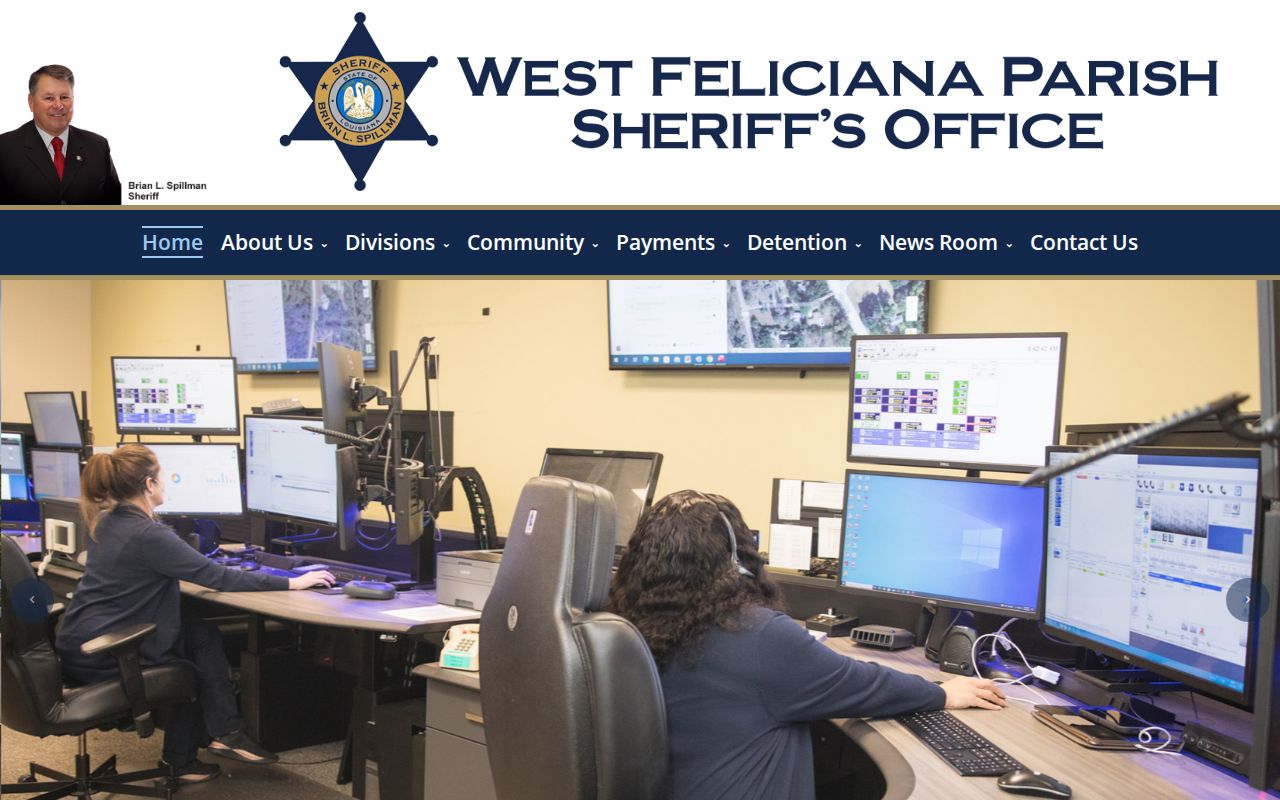
Use that agency navigation for Sheriff-created material; it does not replace the Clerk’s court index or an LSP record review.
Courthouse, Jail, Work Program, and Angola
Four institutions in one small parish are easy to confuse. The courthouse at 4785 Prosperity Street contains the Clerk’s basement counter and Sheriff administration. The West Feliciana Parish Detention Center at 4834 Feliciana Street holds local bookings. The Transitional Work Program at 9943 West Feliciana Parkway is a separate parish facility. Louisiana State Penitentiary at Angola is a state prison operated through Louisiana DPS&C, not the parish jail.
| Question | Correct channel |
|---|---|
| Filed charge or disposition | West Feliciana Clerk / 20th JDC |
| Recent parish booking | WFPSO detention and booking log |
| Transitional-work placement | West Feliciana Transitional Work Program |
| State-prison custody | DPS&C and LA VINE |
The DPS&C parish directory places the local justice offices and facilities in the proper system.
That directory is especially useful when a custody search has reached the wrong facility or agency.
Louisiana Official Background Checks
The Louisiana State Police Bureau of Criminal Identification and Information maintains the central repository. Its Internet Background Check is account-based and purpose-limited, not an unrestricted public people search. A person seeking a certified copy of their own Louisiana record uses the statutory Right to Review and a LAPS appointment at an IdentoGO enrollment site. BCII says Criminal Background does not accept walk-ins.
The current state authorization form lists a $31 state check, including the technology fee. Fingerprint service or federal components may add separate costs, so confirm the total when scheduling. No official IdentoGO site inside West Feliciana Parish was verified; the appointment system identifies available locations.
The BCII service page distinguishes Internet Background Check access from fingerprint-based Right to Review.
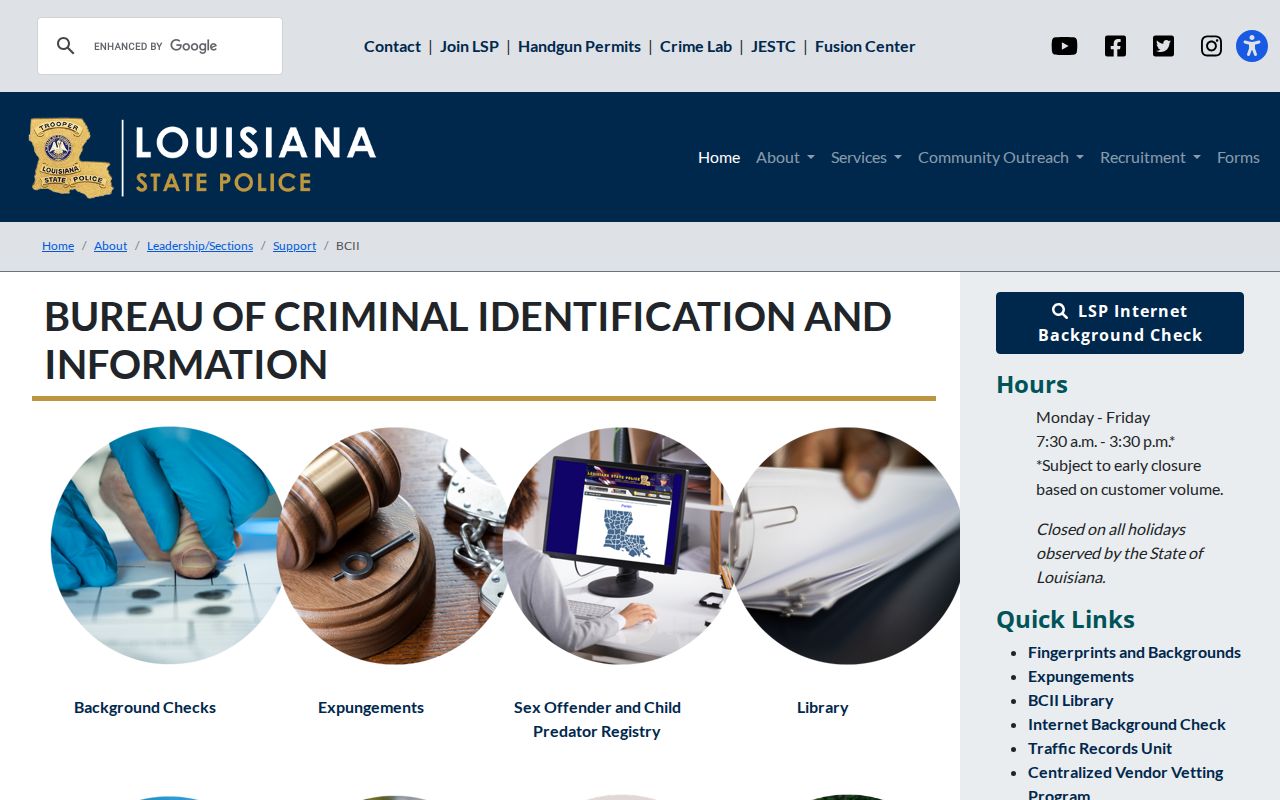
Follow the option matching the authorized purpose rather than treating either route as the Clerk’s parish case search.
The LSP forms index supplies current disclosures and authorization documents.
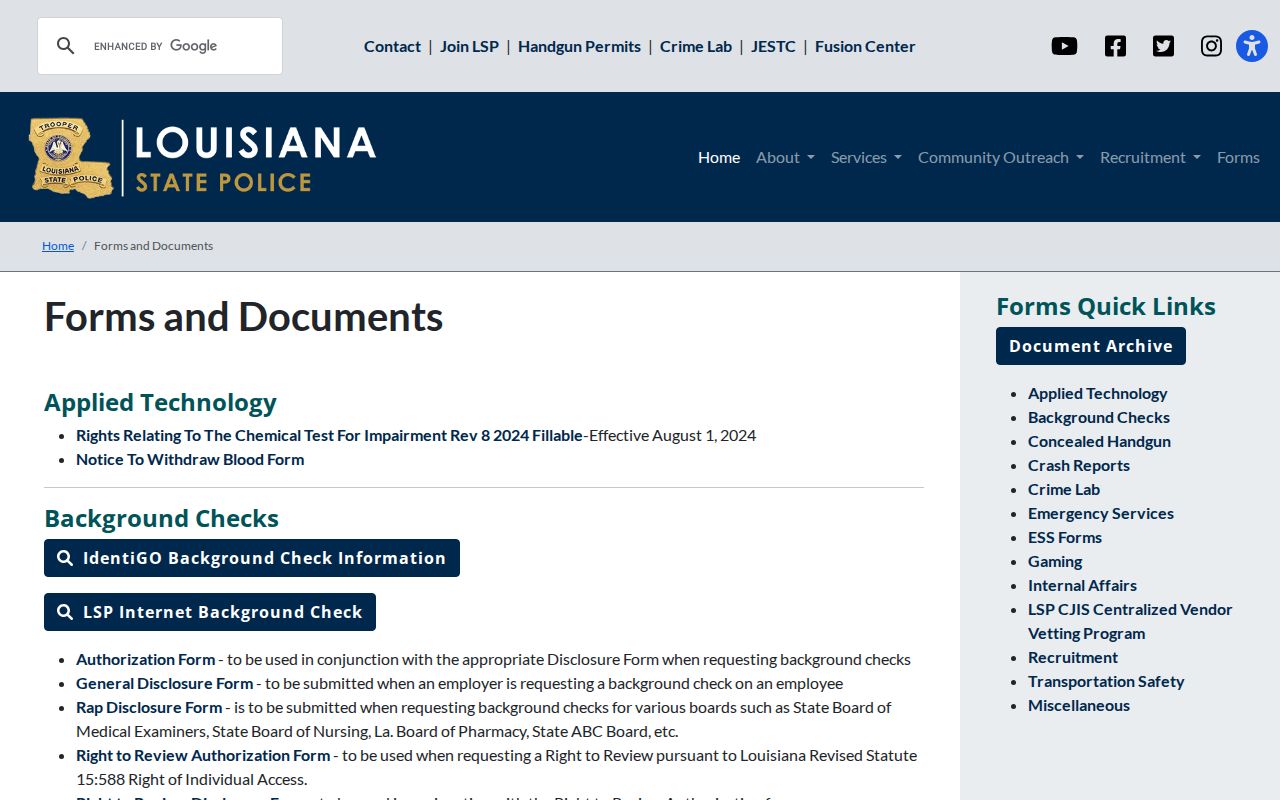
Review the live form before payment because LSP notices and fee components can change.
Why VERDICT CRIMINAL Is the Key Dropdown
The Clerk’s homepage hosts several public-record categories. For a criminal docket, select VERDICT CRIMINAL in the upper-left database menu. Search by the strongest identifier available; a case number is more precise than a common name. If the vendor index identifies a file but does not provide an image without registration or payment, note the docket and ask the Clerk for the particular minute entry, judgment, or certified copy.
| Database | Select VERDICT CRIMINAL, not civil, land, marriage, or probate records. |
|---|---|
| Name | Use the legal spelling and try documented variants. |
| Case number | Use it when known to reduce mistaken matches. |
| Document access | Index access and a viewable or certified document are not the same product. |
Criminal Record Types
An incident report describes the investigating agency’s response. An arrest report records legal authority and initial accusations. A booking record documents jail intake under article 228. A court file preserves the information or indictment, motions, minutes, judgment, sentence, and appeal references. BCII connects fingerprint-identified arrest cycles with reported outcomes, while LA VINE reports custody or supervision. A warrant is court-issued process, and Louisiana has no public statewide e-warrant people search.
- Agency records: request from WFPSO, St. Francisville Police, LSP, or DPS&C according to who created them.
- Court records: obtain from the West Feliciana Clerk for 20th JDC cases.
- Custody records: use the local roster for parish custody and LA VINE for state custody or supervision.
- Registry records: use the Louisiana State Sex Offender and Child Predator Registry for its limited statutory purpose.
What LA VINE Adds After Local Custody
LA VINE covers people incarcerated or under probation or parole supervision in Louisiana’s corrections system and updates every 24 hours. Search it after transfer or sentencing; it is not a complete archive of every parish arrest. The telephone locator at 225-383-4580 accepts a DPS&C number or a name and date of birth.
The Feliciana Probation and Parole District page identifies the state office serving both Feliciana parishes.
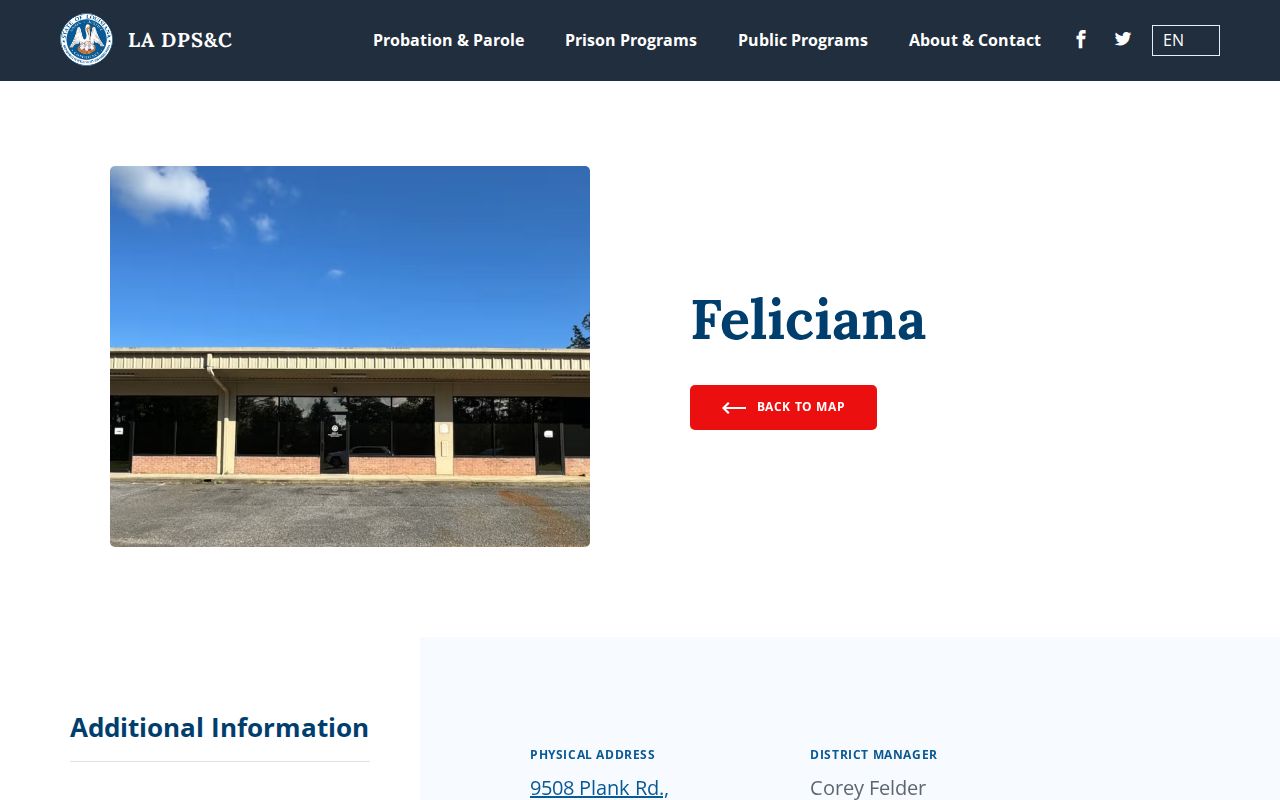
The district’s role explains why community-supervision status can appear in a state locator even after local jail custody ends.
Inside a West Feliciana Parish Criminal Record
Fields vary by source, so read the document label before interpreting a result. Identity details help distinguish people; the allegation describes only the stage shown; and a disposition should come from the judgment or court minutes rather than an assumption based on a roster entry.
| Name & identifiers | Legal name, aliases, birth data, physical descriptors, and agency identifiers where law permits. |
|---|---|
| Arrest / booking | Date, agency, booking number, initial offense, bond, hold, and release information. |
| Charges & statutes | The filed count, Louisiana citation, and amendments shown by the court file. |
| Disposition | Plea, conviction, dismissal, acquittal, or other court termination. |
| Sentence | Custody, probation, financial obligations, and conditions ordered by the court. |
| Custody / supervision | Current facility or probation/parole status when publicly available. |
Booked on Feliciana Street, Filed on Prosperity Street
A local arrest can create four separate records. The arresting agency writes its report; the detention center creates the booking; fingerprints establish identity for transmission to BCII; and the district attorney decides whether and what to file in 20th JDC. The Clerk then preserves filings and daily minutes. Because those events do not occur simultaneously, a booking charge can differ from the prosecutor’s filed count.
The detention information page identifies the local jail counter and explains why callers should contact the facility for current charges.
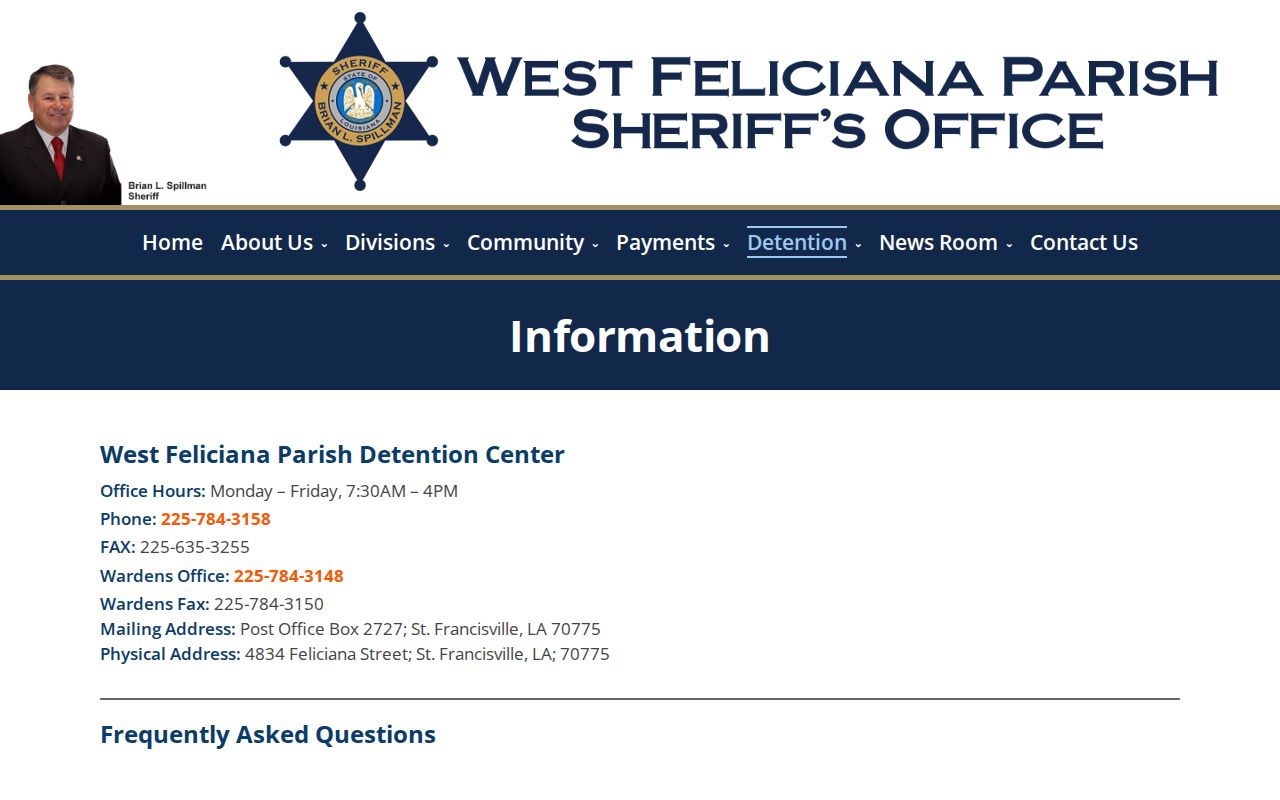
For court dates or final outcomes, move from detention information to the Clerk rather than relying on the jail entry.
Public Access Laws in Louisiana
Louisiana Public Records Law provides inspection and copying rights subject to exemptions, but it does not turn every criminal-history system into an unrestricted public database. Repository dissemination, juvenile confidentiality, active investigations, sealed process, and expungement rules can limit access. Ask the custodian to identify the legal basis when material is withheld.
Key statutes:
La. R.S. 44:32 — governs examination and copying of public records.
La. R.S. 44:35 — provides enforcement and judicial-relief mechanisms.
La. R.S. 15:548 — limits dissemination from the state criminal-history repository.
C.Cr.P. art. 971 — defines Louisiana expungement and its effect.
La. R.S. 15:542.1.5 — assigns central registry duties.
The Legislature’s public-record inspection page is the official text for the basic access rule.
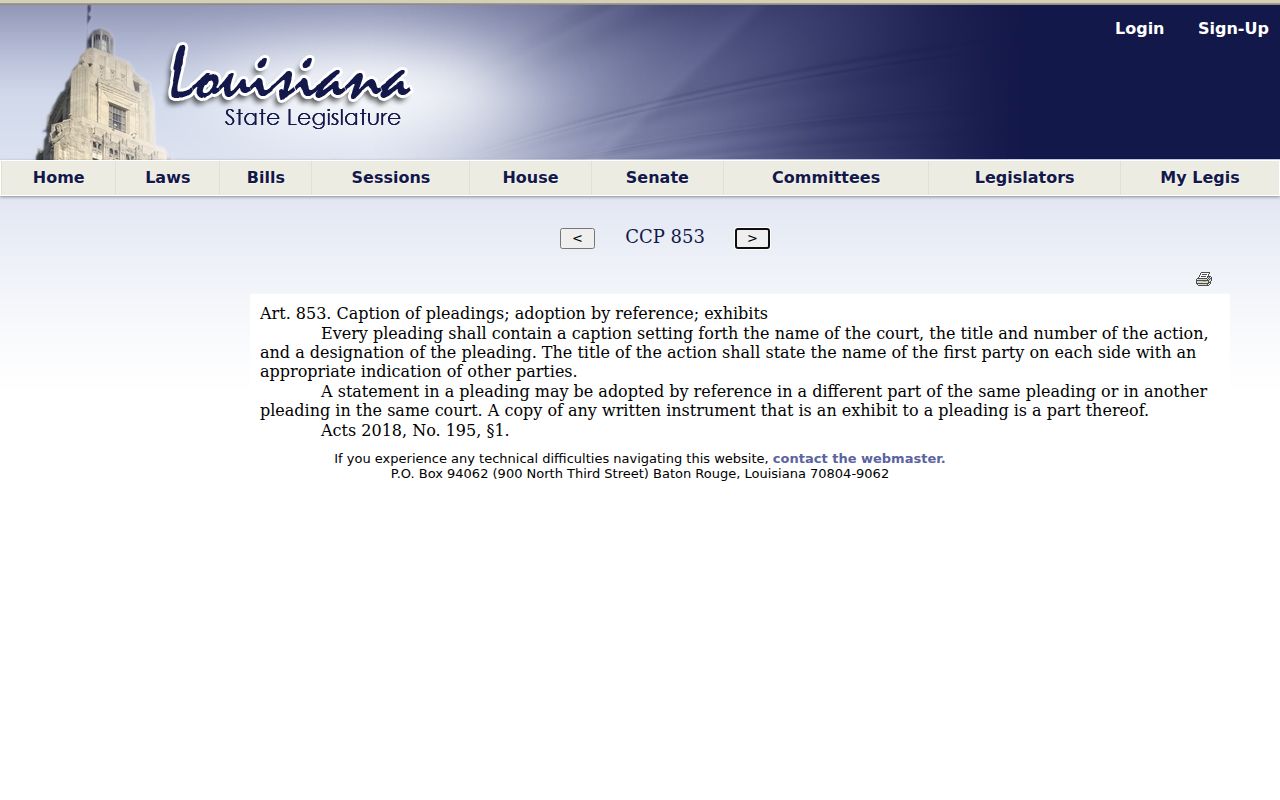
Specific confidentiality and exemption laws still control a particular record.
West Feliciana’s Published Records Fees
WFPSO accepts a sufficiently specific request in person, by mail to P.O. Box 1844, by email at records@wfpso.org, or by fax to 225-635-6947 marked attention RECORDS REQUEST. There is no Sheriff online request form. Give the incident or booking number when known, date and location, record category, desired format, and contact information.
| Product | Published charge |
|---|---|
| Initial criminal report | $5 |
| Booking record | $10 |
| Local Sheriff check | $10, parish-only |
| Final/supplemental report | $1 per page; withheld while investigation or charges remain pending |
| CAD report | $5 |
| Audio | $20 minimum, then $30 per hour |
| Body-camera video | $50 minimum, then $50 per hour |
Booking-photo release is restricted under article 234 and the Sheriff’s policy; the $10 listed charge does not mean every photograph is available.
A Sheriff local background check is also narrower than its name may suggest. WFPSO describes it as an in-person, parish-only product that requires valid driver’s-license identification and normally becomes available the next business day. The Clerk separately lists a $10-per-name search of its criminal index. Neither one is the certified fingerprint-linked Louisiana history provided through BCII. Before paying, state whether the need is a report about one event, a booking sheet, a docket search, a certified judgment, or review of your own statewide record.
Sealed, Expunged, and Restricted Records
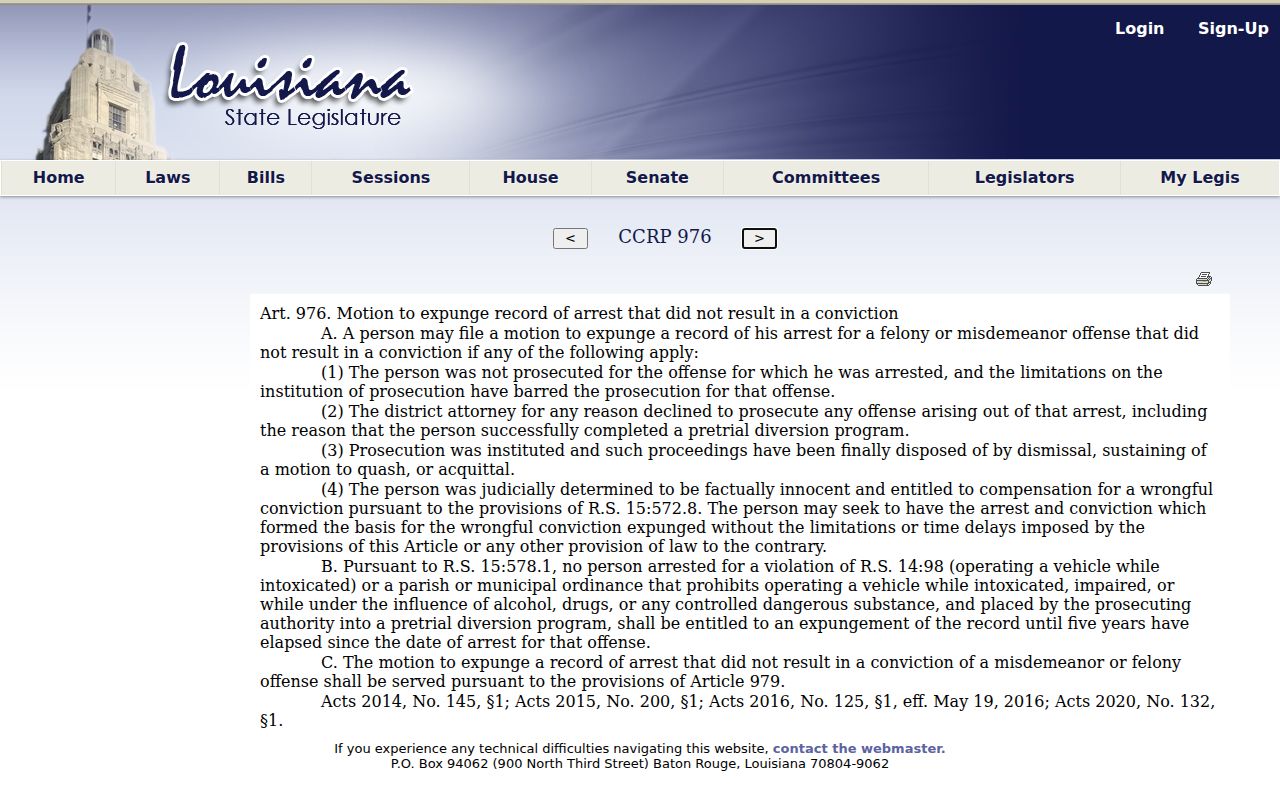
Louisiana expungement removes a qualifying record from ordinary public access but does not necessarily destroy it. Listed agencies retain confidential access. Misdemeanor and felony eligibility differs under Code of Criminal Procedure articles 976 and 977, and exclusions apply. The Clerk publishes a $550 agency-fee breakdown for a standard filing, while article 983 provides statutory exceptions and fee-waiver situations.
The official misdemeanor expungement provision sets the applicable conditions and exclusions.
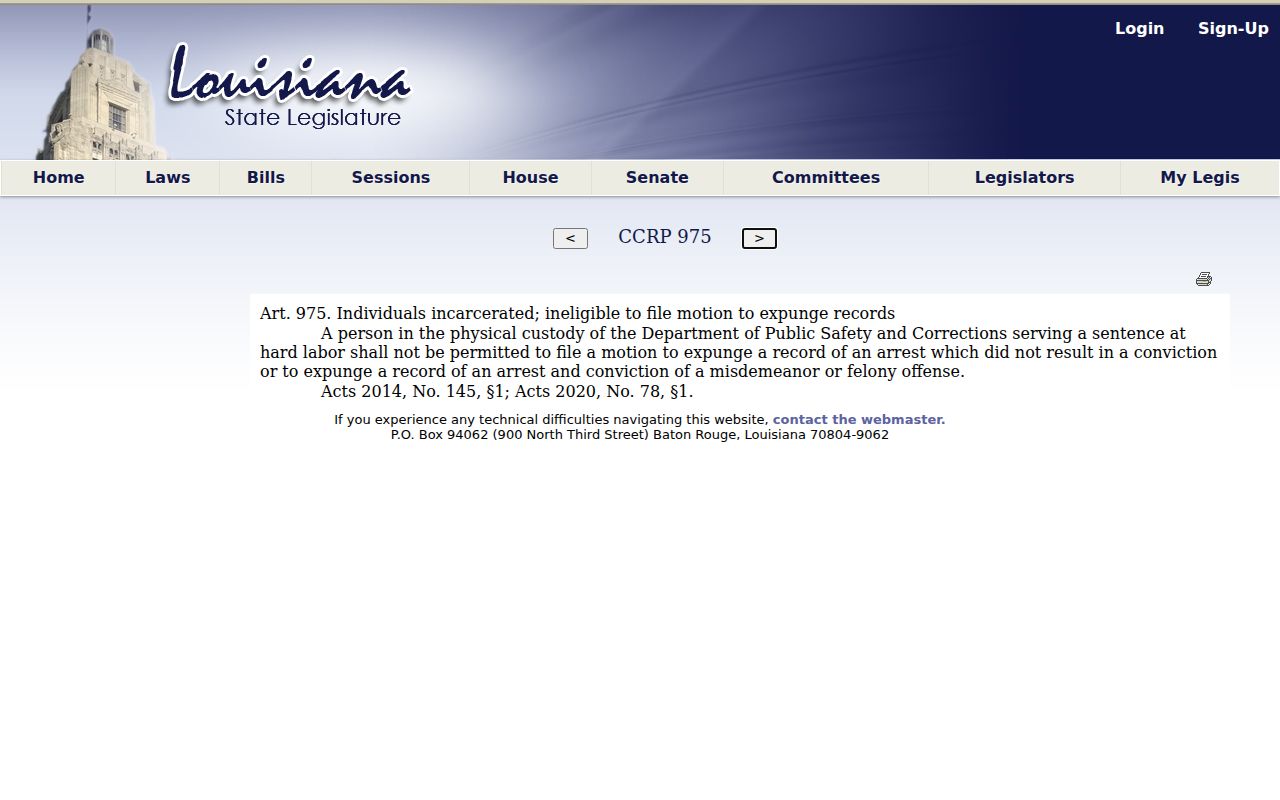
Eligibility turns on the actual disposition and criminal history, not merely on the age of a booking.
The separate felony expungement provision supplies the felony-specific rule.
Use the Clerk’s filed judgment and current statute to assess the correct route; a disappeared web result alone does not establish expungement.
When Your Own Disposition Is Missing
Compare the fingerprint-based BCII Right to Review with the Clerk’s judgment and minutes. Confirm that identifiers and arrest cycle match, obtain a certified disposition if needed, and follow BCII’s correction procedure rather than repeatedly searching public indexes. A dismissal does not mean the booking never occurred, but the final disposition should not be guessed from an old allegation.
Keep the documents tied to the same arrest cycle: agency number, booking date, court docket, charge citation, and final judgment. Name-only searches can merge assumptions around people with similar names, while fingerprint identity and a docket number provide much stronger matching. If the Clerk index has no downloadable image, call 225-635-3794 and request the exact item rather than a vague “criminal record.” Regular Clerk copies are listed at $1 per page, certification at $10, and an extract of minutes at $15.
West Feliciana Parish Criminal Records by City
St. Francisville is the parish seat and West Feliciana’s only incorporated municipality. Town police records route through the Town Clerk, while local bookings use WFPSO and filed district cases use the parish Clerk. Angola and Tunica are unincorporated communities and are not interchangeable city-record systems.
St. Francisville Criminal Records
2020 population 1,557 · Town reports, parish booking, and 20th JDC routing.
Why Parish Statistics Need an Angola Footnote
West Feliciana had an estimated 15,134 residents in 2025 across 403.32 square miles, but Louisiana State Penitentiary’s institutional population affects the parish’s demographic denominator. Prison incidents may also be recorded by DPS&C or another state agency rather than WFPSO. A raw parish crime rate without agency coverage and population context can therefore misdescribe community risk. Use an identified official UCR agency and year for any comparison.
The same distinction matters in an individual search. A person at the parish detention center may appear in the current WFPSO roster; a person moved into state custody should be sought through LA VINE; and an event occurring within Angola may produce a DPS&C or LSP investigative record even though the physical location is West Feliciana. The local booking log does not become the archive for every correctional event inside parish boundaries.
Always record the agency name, reporting year, and geographic coverage beside a statistic. Without those labels, a number cannot reliably distinguish town policing, parish enforcement, or activity within a state institution.